Tiny openings around pipes, cables, conduits, and service lines can become easy routes for water through a basement wall. Soil pressure, aging sealants, and slight foundation movement may open gaps that stay unnoticed until rain drives moisture indoors. Recognizing the patterns around these penetrations can help identify a basement leak before it damages finishes or spreads behind a wall.
Damp Rings Around Pipes Often Point to a Failed Seal
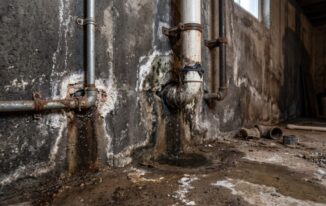
Circular moisture stains around water, sewer, gas, or HVAC lines often indicate that the seal between the pipe sleeve and foundation has deteriorated. Builders typically leave a small clearance around penetrations, then close that space with mortar, sealant, or another waterproof material. Years of temperature changes and minor movement can separate the seal from either the pipe or concrete, leaving a narrow route for groundwater. Fresh staining after rain provides an especially useful clue because plumbing leaks often continue regardless of weather. Homeowners searching for basement leak repair near me should note whether moisture begins at the outside edge of the penetration, runs down the wall, or appears only during wet conditions.
Why Does Efflorescence Gather Around Utility Openings?
White mineral deposits can build around utility penetrations when groundwater passes through masonry and evaporates on the basement side. Dissolved salts remain on the wall as powdery rings, streaks, or crusty patches that may return after cleaning. Concrete around drilled openings can be more vulnerable because installation sometimes creates small fractures that increase water movement through the surrounding material. Reappearing efflorescence does not necessarily mean water is actively dripping, but it does show that moisture has traveled through the wall. Inspectors compare these deposits with exterior grading, soil conditions, and the location of nearby utilities before recommending basement leak repair.
Rust on Metal Sleeves Can Reveal Long-Term Moisture Exposure
Orange staining around steel sleeves, electrical conduits, anchor hardware, or pipe supports usually develops after repeated contact with moisture. Corrosion may expand the metal slightly, breaking nearby mortar or creating additional space between the penetration and its original seal. Continued deterioration can also weaken brackets and fasteners that support mechanical equipment. Unlike a fresh water stain, rust suggests that the area has stayed damp through multiple wetting cycles. Contractors examine both the visible metal and concealed wall opening because replacing corroded hardware alone will not stop groundwater from entering through the same gap.
Peeling Paint May Trace a Hidden Path From the Penetration
Blistered paint several inches below a pipe or conduit can show where water travels after entering the foundation. Gravity pulls moisture downward behind coatings, while porous block or concrete can spread it sideways before it reaches the visible surface. Painted walls sometimes hide the entry point because the first noticeable bubble appears well below the utility opening. Careful inspection follows damaged paint upward and checks nearby penetrations with moisture readings. Surface repainting may make the wall look better temporarily, but trapped water can push through the new coating once pressure builds outside again.
Soft Drywall Near Service Lines Deserves a Closer Look
Finished basements can conceal utility penetrations behind drywall, insulation, cabinets, or mechanical-room walls. Moisture entering around a service line may soak the back of the drywall before any stain appears on the room-facing side. Damp gypsum can soften, swell around screws, loosen joint tape, and create conditions that support microbial growth on its paper covering. Musty odors near cable boxes, plumbing chases, or utility panels may therefore appear before obvious water damage. Technicians sometimes need limited access behind finished surfaces to confirm whether the problem comes from the foundation opening, pipe condensation, or an actual plumbing failure.
Water Trails Below Electrical Conduit Need Careful Diagnosis
Electrical service penetrations require particular attention because water can sometimes follow conduit toward the interior. Poor exterior sealing, improperly sloped conduit, or openings around service sleeves can direct rainwater toward the foundation rather than away from it. Dark streaks beneath the penetration may show where that water reaches the wall, but electrical components should not be handled during a casual leak check. Qualified professionals can determine whether moisture originates outside the building while an electrician addresses any affected electrical equipment. Safe basement leak repair keeps waterproofing work separate from tasks requiring electrical expertise.
Cracks Beside a Penetration May Signal More Than Failed Caulk
Foundation openings interrupt otherwise continuous concrete and can concentrate stress around their edges. Slight settlement or shrinkage may produce short cracks extending from a pipe sleeve, conduit opening, or utility recess. Wider gaps, displaced concrete, or cracks that continue growing deserve structural attention rather than another bead of sealant. Flexible polyurethane may work for certain leaking openings, while stable structural cracks can require different materials. Diagnosis should determine whether water is simply passing through a failed joint or foundation movement is continuing to enlarge the pathway.
Wet Insulation Can Hide the Size of the Leak
Fiberglass and other insulation materials can hold water against foundation walls after moisture enters around a utility opening. Saturated insulation may spread dampness beyond the original penetration, making the leak appear larger or placing nearby wood framing at risk. Persistent contact can stain sill plates, corrode fasteners, and slow drying inside enclosed wall cavities. Removal may be necessary when insulation remains wet or contaminated after the water source has been corrected. Contractors also check whether condensation on cold pipes contributed to the moisture, since waterproofing the wall would not solve that separate problem.
Exterior Utility Trenches Can Funnel Water Toward the Basement
Backfilled trenches around sewer lines, water services, and underground electrical runs may settle differently from untouched soil. Looser material can create a path that lets surface water move toward the foundation faster than it would through surrounding ground. Poor grading above the trench can make the effect worse by directing rain toward the utility penetration. Downspouts located nearby may add a concentrated source of runoff during storms. Exterior evaluation therefore matters because sealing the interior opening without changing the water path can leave pressure building against the repaired area.
A Proper Repair Starts With Finding Why the Opening Leaks
Different utility penetrations require different sealing methods depending on pipe material, wall construction, movement, and water pressure. Flexible injection resins, hydraulic materials, exterior waterproofing, drainage corrections, or new penetration seals may be appropriate after the source is identified. Kennedy and Sons can help trace moisture around utility lines, service openings, foundation cracks, and nearby drainage conditions before repair work begins. By looking at how water reaches the penetration rather than simply covering the damp spot, their team can recommend basement leak repair suited to the actual problem.