
Key Takeaways
- Define the project’s purpose before choosing materials or layouts.
- Inspect the property for slopes, drainage, trees, roots, and access issues.
- Choose fencing, decking, and other materials based on use, weather, maintenance, and budget.
- Confirm property lines, easements, permits, and HOA requirements before construction.
- Contact 811 before digging to have underground utilities marked.
- Plan gates, paths, lighting, stairs, and railings with daily safety and convenience in mind.
- Prepare the yard and delivery areas before construction begins.
- Compare project estimates based on materials, labor, preparation, cleanup, and included services.
- Create a seasonal maintenance plan to monitor outdoor structures and surfaces.
- Keep future use, repairs, and long-term maintenance costs in the initial plan.
Outdoor improvements can make a Loudoun County property more comfortable, private, and practical. Still, the strongest results begin with planning rather than the delivery of lumber or a crew arriving at the curb. Whether the project involves a patio-side enclosure, a pet area, or a wood privacy fence in Loudoun County, VA, homeowners should first consider how the space will serve the household throughout the seasons and in daily routines. Lots across Loudoun County can vary widely in size, elevation, tree coverage, and access. A careful plan helps homeowners account for sloped backyards, mature landscaping, drainage patterns, neighborhood requirements, and the practical details that influence how a fence, deck, or walkway performs over time.
Set Clear Goals for the Space
Start by identifying the project’s primary purpose. Privacy, pet containment, child safety, curb appeal, security, outdoor entertaining, and garden protection can each lead to different design decisions. A homeowner who wants a quiet sitting area may prioritize solid fence panels and a screened view, while a family planning a play space may place more value on gates, clear sightlines, and durable surfaces.
Separate necessities from upgrades
- List the features the project must include, such as a secure gate or stairs with a handrail.
- Add optional improvements, such as decorative caps, built-in seating, lighting, or planters.
- Consider future additions, including a grill area, shed, garden beds, or pool.
This simple exercise keeps the project focused. It also makes it easier to compare estimates without losing sight of the features that matter most.
Inspect the Property Before Planning
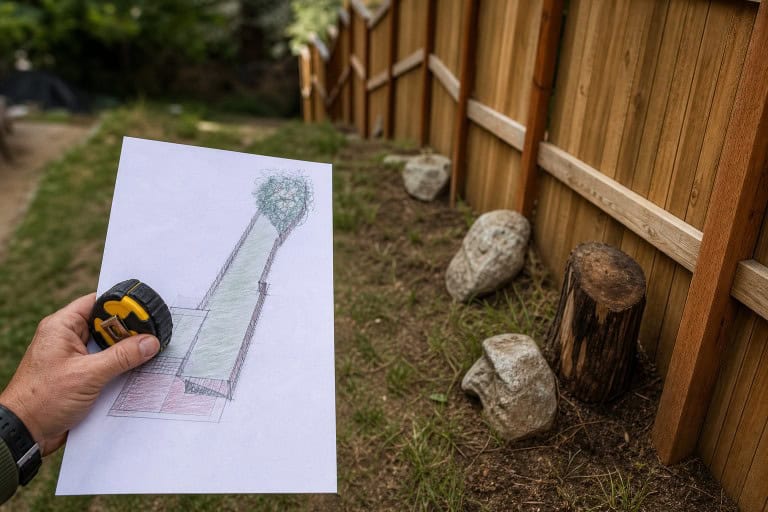
Walk the yard before choosing a layout. Notice where water moves after rain, where the ground changes elevation, and where soil remains soft or damp. Also identify trees, exposed roots, retaining walls, patios, utility equipment, sheds, and existing fencing. These conditions can affect post placement, footing depth, material quantities, and access for workers or deliveries. For example, a fence line that appears straight on a simple sketch may need stepped sections to follow a slope, or a small adjustment to avoid a mature tree’s root area. Marking likely obstacles early can prevent last-minute layout changes after materials have arrived.
Choose Materials for Use and Weather
There is no single best material for every Loudoun County backyard. The right choice depends on the project’s purpose, the desired appearance, the amount of shade and moisture on the site, the expected level of maintenance, and the available budget.
- Wood provides a traditional appearance and flexible design options, but it needs regular inspection and appropriate care.
- Vinyl is commonly selected for a clean, consistent appearance and straightforward cleaning.
- Aluminum can preserve an open view while defining a boundary.
- Chain link can be a practical option where function, visibility, and cost are the main concerns.
- Composite decking may reduce some routine finish-related upkeep, although its initial cost can be higher than some wood options.
Compare ownership costs, not only the initial installation price. Cleaning supplies, stain or sealant, replacement boards, hardware repairs, and future labor can all affect the long-term value of a choice.
Review Property Lines, Permits, and Local Rules
Confirm property boundaries before placing posts, panels, stairs, or footings. A survey, plat, or qualified survey professional can help clarify where the property ends, especially near shared boundaries, easements, drainage areas, and corner lots. Homeowners should also check applicable county, town, neighborhood, and homeowners’ association requirements before construction begins. Rules can address height, placement, setbacks, deck details, and permits, so do not rely on a neighbor’s project as proof that the same plan will be approved for your lot. Keep surveys, approvals, drawings, contracts, and product information together for easy reference. Before post holes or footings are dug, use 811’s before-you-dig process to request utility markings for the work area. Even a modest fence or landscaping project can involve digging near buried lines, so this step should be completed before breaking ground.
Plan for Safety and Daily Use
A well-designed outdoor space should work comfortably for the people and animals who use it every day. Think through how guests enter, how a dog reaches the yard, where children play, and whether someone carrying groceries can safely use the route from the driveway or door.
- Choose gates that operate smoothly and latch reliably.
- Keep paths clear of trip hazards and sudden elevation changes.
- Plan lighting near gates, steps, entrances, and outdoor seating areas.
- Include suitable railings and slip-resistant walking surfaces where needed.
- Place grills and fire features with appropriate clearance from combustible materials.
Deck connections deserve particular attention. The International Code Council explains that a deck ledger should be positively connected to the house, rather than relying only on nails. Ask the contractor how the deck will be supported, attached, flashed, and inspected.
Prepare the Site Before Construction
Good preparation helps the installation move efficiently and protects the parts of the yard that will remain. Remove movable furniture, toys, pots, and loose yard items. Mark the planned work area, protect trees and planting beds, and decide where to place excavated soil, packaging, and material cutoffs without blocking access. It is also wise to consider delivery routes. Narrow side yards, parked vehicles, low branches, and wet ground can make it harder to move materials safely. Addressing access early can reduce disruption on installation day.
Build a Practical Project Budget
A complete budget includes more than visible boards, panels, or labor. Account for site measurements, permits, survey work, removal of old structures, drainage corrections, grading, gates, railings, stairs, lighting, and cleanup. Set aside a reasonable reserve for conditions that only become visible once work begins, such as hidden concrete, roots, or uneven ground. When comparing written estimates, review them line by line. A lower number may reflect fewer included services, a different material grade, limited preparation, or less detail about debris removal and finishing work.
Create a Simple Maintenance Plan
Regular checks can help small issues stay small. In spring, inspect posts, fasteners, gates, railings, and drainage. During summer, look for loose boards, plant growth against structures, and signs that a finish needs attention. In the fall, rake leaves from steps, corners, and areas that hold moisture. After winter storms, check for movement, cracking, rust, or damage from fallen limbs. Always follow the manufacturer’s care instructions for the specific material. Aggressive cleaners, improper pressure washing, or unsuitable tools can damage finishes and surfaces.
Use a Final Planning Checklist
- Have the project goals been written down?
- Are property lines and possible easements confirmed?
- Have local and neighborhood requirements been reviewed?
- Have underground utilities been marked before digging?
- Has the yard been checked for slopes, drainage, roots, and obstacles?
- Do the selected materials fit the site and maintenance plan?
- Are gates, stairs, lighting, and railings included where needed?
- Does the budget cover preparation, cleanup, and future care?
Conclusion
A successful outdoor project in Loudoun County starts well before construction. By defining the purpose, studying the property, checking drainage and grading, confirming local requirements, choosing suitable materials, and considering how the space will be used throughout the year, homeowners can make more informed planning decisions. It is also helpful to consider sunlight, shade, privacy, existing landscaping, access for construction equipment, and the long-term maintenance needs of plants, hardscaping, lighting, and other features. Establishing a realistic budget and timeline before work begins can help reduce unexpected changes during construction. Planning for routine cleaning, repairs, seasonal care, and future adjustments can also make the finished space easier to maintain. With careful preparation and attention to site conditions, homeowners can create an outdoor area that feels intentional, safe, functional, and useful for years to come.