
Key Takeaways
- Choose a style that works with the home’s architecture rather than a short-lived trend.
- Compare materials based on maintenance, moisture exposure, durability, and budget.
- Consider insulation carefully for attached garages and regularly used spaces.
- Measure the opening, headroom, side room, and backroom before selecting a door.
- Include windows, hardware, weather seals, and opener needs in the overall decision.
- Budget for installation, removal, maintenance, and future repairs, as well as the door itself.
A garage door is a large, frequently used part of the home’s exterior, so choosing one involves more than picking a color or panel pattern. The right residential garage doors option should complement the house, withstand local weather, fit the opening properly, and support how the garage is used each day.
For some households, the garage is simply vehicle storage. For others, it doubles as a workshop, an exercise area, an entry point, or a storage room. Thinking through those routines before shopping can prevent an attractive door from becoming an inconvenient or high-maintenance choice later.
1. Why the Choice Matters
Because a garage door can occupy a substantial portion of a house’s front, it strongly affects curb appeal. It also influences everyday comfort, security, noise, weather protection, and ease of access. A door that fits the driveway and the home may make arrivals and departures feel routine instead of frustrating.
Focusing only on the initial price can create problems. For example, a homeowner may choose a low-cost dark wood door for its appearance, only to find that direct sun fades the finish and seasonal moisture demands more upkeep than expected. Regular garage door servicing can help identify wear in moving parts before it interferes with safe, reliable operation.
2. Match the Door to the Home
Start with the home itself. Look at the roofline, siding, trim, windows, front entry door, and exterior lighting. A garage door does not need to match every detail exactly, but it should look intentional within the overall design.
Style Considerations
- Traditional homes: Raised panels, symmetrical windows, and simple hardware often feel appropriate.
- Craftsman-style homes: Horizontal paneling, upper window bands, and carriage-inspired details can echo the home’s character.
- Modern homes: Flush panels, clean lines, aluminum framing, and glass sections may suit a more minimal exterior.
- Farmhouse-style homes: Vertical boards, crossbuck patterns, and muted neutral finishes can work well.
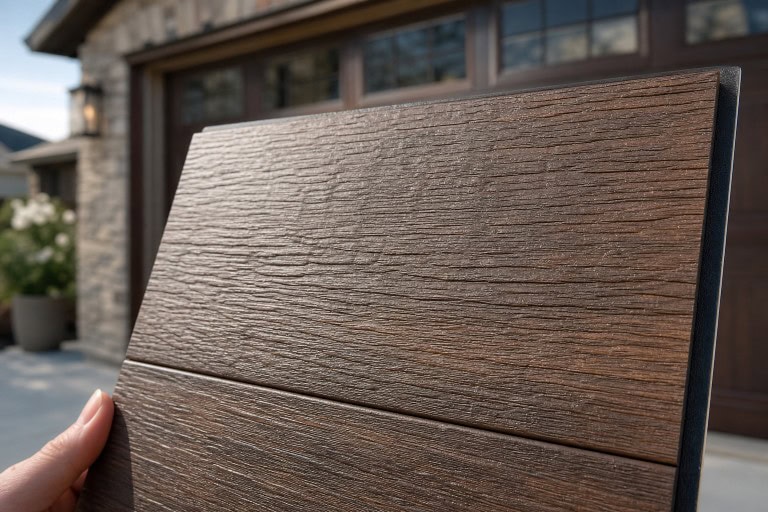
View finish samples outdoors before making a final choice. Sunlight, shade, and surrounding colors can make the same paint or stain appear very different throughout the day.
3. Compare Common Materials
Garage doors can be made from several materials, each with its own trade-offs. Common garage door materials include steel, aluminum, wood, fiberglass, vinyl, and composite construction.
- Steel: A widely available option that can offer strength, many style choices, and insulated construction. It can dent, and damaged coatings may require attention to reduce the risk of corrosion.
- Wood: Provides natural texture and a custom appearance, but usually needs regular staining, painting, and moisture management.
- Aluminum: Lightweight and resistant to rust, making it useful for contemporary full-view designs. It may dent more easily than steel.
- Fiberglass or composite: Can provide a wood-like appearance with less moisture-related upkeep, although quality varies by construction.
- Vinyl: Often low maintenance and resistant to dents, though colors and design choices may be more limited.
4. Let Climate Guide the Decision
Climate should influence both the door material and the supporting hardware. Humidity and heavy rain can affect wood finishes, bottom seals, hinges, and rollers. Coastal air may call for corrosion-resistant components. In areas with freezing temperatures, flexible weather seals and properly adjusted moving parts become especially important.
Strong sun can heat an uninsulated garage and gradually affect darker finishes. Homes in high-wind or storm-prone areas should also verify applicable local building requirements before choosing a door. A door’s appearance matters, but climate compatibility helps determine how well it performs over time.
5. Decide How Much Insulation Is Needed
Insulation is most worth considering when the garage is attached to the house, shares a wall or ceiling with living space, or is used as a workshop or gym. A higher R-value generally means greater resistance to heat flow, but seals, installation quality, framing, and air leaks also affect real-world performance.
An attached garage should stay properly separated from the living space. While insulation enhances comfort, it cannot replace effective separation, weatherstripping, and safe ventilation practices.
6. Check Measurements Before Shopping
Measure more than the visible width and height of the opening. A proper installation also depends on the available clearance around and behind the door.
- Opening width and height.
- Headroom above the opening.
- Side room beside both tracks.
- Backroom from the opening to the rear wall.
- Ceiling beams, lights, ductwork, and storage racks.
- Existing track layout and opener location.
Unusual openings, low ceilings, modified framing, or existing damage may require a professional measurement before ordering.
7. Review Features and Hardware
Windows can bring daylight into the garage, but placement affects privacy and visibility. Consider tempered or impact-rated glass where appropriate. Decorative handles and hinges can change the door’s appearance, while weather seals, rollers, tracks, springs, and locks affect how it operates.
For automatic doors, make sure the opener is properly matched to the door’s weight and configuration. Useful features may include battery backup, rolling-code security, motion-controlled lighting, and smartphone alerts, but the best features are the ones that genuinely suit the household routine.
8. Build a Realistic Budget
Compare itemized estimates rather than comparing a single total. The project cost may include the door panels, insulation, windows, hardware, tracks, rollers, springs, opener work, installation, removal of the old door, and disposal. Two similar-looking quotes can differ because one includes higher-grade operating parts or additional preparation work.
9. Avoid Common Mistakes
- Choosing by appearance alone.
- Ignoring local sun, moisture, wind, or temperature conditions.
- Ordering without checking clearance and opener compatibility.
- Paying for maximum insulation when the garage is rarely used.
- Overlooking ongoing painting, sealing, lubrication, and repair needs.
- Assuming new noises, uneven movement, or visible wear will resolve on their own.
10. Use a Simple Selection Checklist
- Photograph the home from the street.
- Identify architectural details worth repeating.
- Measure the opening and surrounding clearance.
- List how the garage is used each week.
- Review weather and moisture concerns.
- Compare materials by durability and maintenance needs.
- Select insulation and features that fit the space.
- Request clear, itemized estimates.
- Plan for routine inspection and upkeep.
Final Thoughts
The best garage door is not automatically the most expensive or the most visually dramatic. It is the one that fits the home’s design, local climate, available space, maintenance expectations, and daily use. Taking time to compare these factors before purchasing can lead to a door that looks appropriate and works dependably for years.