
Key Takeaways
- Plan temporary power and climate control early in the project.
- Size equipment based on actual jobsite power and heating or cooling needs.
- Follow safe practices for generator placement, fuel handling, and electrical connections.
- Perform daily inspections to identify issues before they cause downtime.
- Coordinate equipment, fuel, and maintenance to keep projects running efficiently.
Temporary power, heating, cooling, lighting, ventilation, and fuel support can determine whether a commercial project stays productive or loses time to avoidable interruptions. Weather shifts, changing layouts, high-demand equipment, and limited access all make site systems more complex than simply delivering a generator and running a few cords. For Colorado commercial teams, One Call Rentals provides commercial generator and heater rentals, diesel fuel delivery, lighting, and related jobsite-support equipment. Established in 2006 and based in Denver, the company supports construction, events, emergency needs, and other operations with practical equipment solutions and fuel service designed to keep projects moving through demanding Colorado conditions.
Start With a Clear Site Assessment
Build the temporary-site plan before equipment arrives. Identify the project type, square footage, work phases, expected duration, shift schedule, and the people who will operate or monitor the equipment. A short renovation may require only limited daytime power, while a winter concrete project or an occupied-building remodel may require around-the-clock heating, lighting, and fuel monitoring. List every anticipated load, including hand tools, welders, pumps, compressors, task lighting, trailers, charging stations, heaters, cooling units, and temporary ventilation. Then assess conditions that affect placement and operation: elevation, snow, wind, mud, dust, moisture, vehicle access, and available staging space. Mark doors, windows, fresh-air intakes, utility lines, pedestrian routes, fuel-storage areas, and emergency access points before selecting locations.
Calculate the Real Electrical Load
A reliable temporary power plan accounts for more than nameplate wattage. Running watts describe the amount of electricity the equipment consumes while operating. Starting watts reflect the additional demand that some motors, pumps, and compressors require when starting. Voltage, phase, and amperage also determine whether a generator and distribution system can safely serve the connected equipment. Separate essential loads from loads that can be paused during peak demand. For example, critical lighting, dewatering pumps, security systems, and heat protection may need priority, while battery charging or certain tools can be scheduled around them. Include capacity for future phases rather than sizing only for the first week. A qualified electrician should review the final load calculation, connections, grounding approach, and distribution design.
Choose a Complete Temporary Power Setup
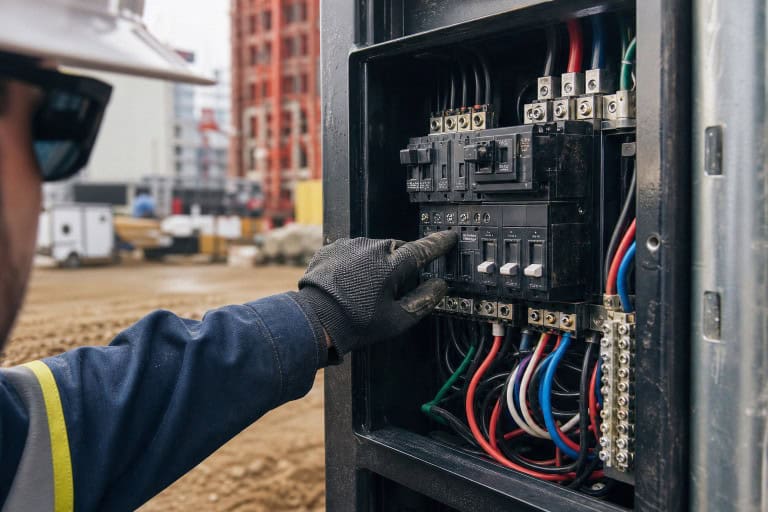
Generator size is only one part of the system. Small portable units may work for localized tools or low-demand needs. Larger commercial generators can support broader construction loads, climate-control equipment, or site trailers. Generator banks may suit sites with changing demand, while hybrid systems can reduce generator runtime where batteries or renewable inputs fit the application. Quiet inverter-style units can be useful in sensitive electronics environments, noise-sensitive areas, or for smaller events. Regardless of generator type, plan for distribution panels, spider boxes, transfer switches, properly rated cables, cord protection, and clearly labeled circuits. In a commercial renovation, for instance, separate circuits for tools, temporary lighting, and climate equipment can prevent a heater startup from shutting down critical work.
Build Safety Controls Into the Layout
Fuel-burning generators should be located outdoors, with exhaust directed away from buildings, trailers, tents, or occupied areas through doors, windows, or air intakes. OSHA’s portable generator safety guidance is a useful reference for outdoor placement, carbon monoxide prevention, dry operating conditions, and equipment inspection. Use GFCI protection where required, inspect cords and plugs before each shift, and remove damaged equipment from service. Protect cables from vehicle traffic, sharp edges, standing water, snow, and doorways. Secure generators, panels, and fuel tanks against unauthorized access. Connections, transfer switching, grounding, repairs, and service work should be handled by qualified personnel.
Match Heating and Cooling to the Work Area
Climate control should fit both the space and the work being performed. Direct-fired heaters introduce combustion byproducts into the heated air and may be appropriate only where ventilation and the application allow. Indirect-fired heaters send clean, dry heated air through ducting, making them a stronger choice for enclosed areas, tents, warehouses, and occupied renovation spaces. For warm-weather work, consider cooling capacity, airflow, humidity, ventilation, and duct routes. Keep units and ducts clear of exits, fire equipment, air intakes, and emergency routes. Inadequate temperature or moisture control can interfere with adhesives, coatings, drywall finishing, concrete curing, stored materials, equipment performance, and worker comfort.
Plan Fuel, Refueling, and Daily Monitoring
Estimate fuel use using generator size, average operating load, runtime, and weather conditions. Build refueling into the work plan, so crews do not have to wait for a shutdown to address fuel needs. Keep delivery routes open, maintain separation from ignition sources, and confirm that fuel storage and handling follow the applicable site requirements. Assign someone to track runtime, fuel levels, alarms, leaks, maintenance intervals, and unusual sounds or exhaust. Scheduled on-site fueling can be especially valuable for long-duration projects, remote sites, and operations that cannot tolerate avoidable downtime.
Coordinate Equipment With the Project Schedule
Order early when seasonal weather, major events, or regional demand could affect availability. Treat delivery, placement, setup, testing, fueling, inspection, service, and removal as separate scheduled tasks. Reassess the plan when work shifts from demolition to framing, interior finishes, commissioning, or closeout. Having a single point of contact for equipment, fuel, service calls, and schedule changes helps prevent missed handoffs.
Protect Indoor Air Quality During Construction
Dust, fumes, moisture, combustion exhaust, and poor airflow can affect workers, occupants, and finished spaces. Coordinate temporary heating and cooling with containment walls, negative-air equipment, dust control, and ventilation routes. Keep exhaust well away from occupied areas and HVAC intakes, and avoid creating pressure conditions that pull contaminants into adjacent rooms. Temporary electrical work also requires deliberate planning.
Create a Simple Daily Inspection Checklist
- Inspect generators, heaters, cords, plugs, panels, hoses, and fuel lines.
- Confirm equipment is stable, dry, ventilated, and protected from traffic.
- Check breakers, emergency stops, alarms, GFCIs, and grounding connections.
- Review fuel levels and look for leaks, damaged fittings, or unusual operating sounds.
- Walk cable routes, remove trip hazards, and verify cord protection remains intact.
- Record repairs, shutdowns, weather conditions, and changes in site demand.
Common Planning Mistakes to Avoid
- Choosing equipment by generator size alone.
- Ignoring motor and pump startup demand.
- Placing generators too close to buildings or air intakes.
- Using combustion equipment in enclosed areas without proper controls.
- Running cords through wet areas or vehicle lanes without protection.
- Waiting until the last minute to arrange accessories, fuel, or service.
- Failing to update the plan when the site layout changes.
Questions Project Managers Often Ask
How much temporary power does a jobsite need?
It depends on connected load, startup demand, voltage, phase, operating hours, and expected future needs. Have a qualified electrician review the final design.
Can a generator run inside a building or a tent?
No. Fuel-burning generators should operate outdoors where exhaust cannot enter enclosed or occupied spaces.
What should be included in a rental request?
Provide the address, equipment list, voltage, phase, estimated load, delivery date, operating hours, access limits, fuel needs, climate-control requirements, and any noise or emissions restrictions.
Conclusion
Temporary power and climate control work best when treated as core project systems rather than last-minute add-ons. A careful site assessment, realistic load calculation, safe equipment layout, dependable fuel plan, and consistent daily inspections can reduce downtime, improve efficiency, and help protect workers throughout every phase of a 2026 project. Coordinating these systems with construction schedules, weather forecasts, and changing site conditions also helps prevent unnecessary delays and equipment failures. Regular maintenance, clear communication among crews, and prompt adjustments as project needs evolve can further improve reliability. By planning temporary utilities as an essential part of the overall project strategy, contractors can support safer operations, maintain productivity, and minimize costly disruptions from groundbreaking through project completion.