Key Takeaways
- Pole buildings, also known as post-frame structures, are renowned for their adaptability, speed of construction, and cost efficiency.
- They are engineered using large posts or columns and are suitable for a wide range of residential, commercial, and agricultural uses.
- Important design considerations include foundation options, insulation, ventilation, and adherence to local building codes.
- Understanding the essentials of post-frame construction ensures a successful and durable building project.
Introduction to Pole Buildings
Pole buildings, often referred to as post-frame structures, represent a smart solution for those seeking affordable yet durable buildings. They originated in the agricultural sector in the 1930s but have since become popular for various other applications thanks to their straightforward assembly, structural strength, and wide-ranging design options. If you’re exploring your construction options, understanding the basics of pole buildings is essential, especially for anyone interested in Amish pole buildings, which emphasize craftsmanship and high-quality materials.
Unlike traditional construction methods that rely heavily on continuous foundations and stud walls, pole buildings utilize large wood posts or laminated columns set directly in the ground or on piers. This innovative approach enables significant savings in time and materials, appealing to landowners who require everything from farm storage to custom living spaces.
Their adaptability has fueled the rapid evolution of pole buildings. What started as simple barns and sheds has quickly expanded into residential garages, workshops, and even community centers. Their open interiors, limited only by roof truss engineering, allow for spacious and customizable layouts to meet nearly any need.
Additionally, the minimal use of load-bearing walls allows for greater flexibility in interior layouts and future modifications. Whether you’re a homeowner, business owner, or farmer, there are practical reasons to consider post-frame construction for your next project.
Understanding Post-Frame Construction
At the heart of every pole building is the post-frame construction method. Unlike stick-built structures that use smaller wood studs set on continuous foundations, post-frame buildings are engineered using larger, spaced-apart wood columns. These columns—either solid sawn or laminated—act as primary load-bearers, carrying the weight of the roof and redirecting it directly into the ground or pier foundation.
This design not only distributes loads more efficiently but also enables the creation of wide, open interiors without compromising on structural integrity. The National Frame Building Association notes that these buildings adhere to both the Uniform Building Code (UBC) and the International Building Code (IBC) requirements, ensuring safety and long-term performance.
Key Components of a Pole Building
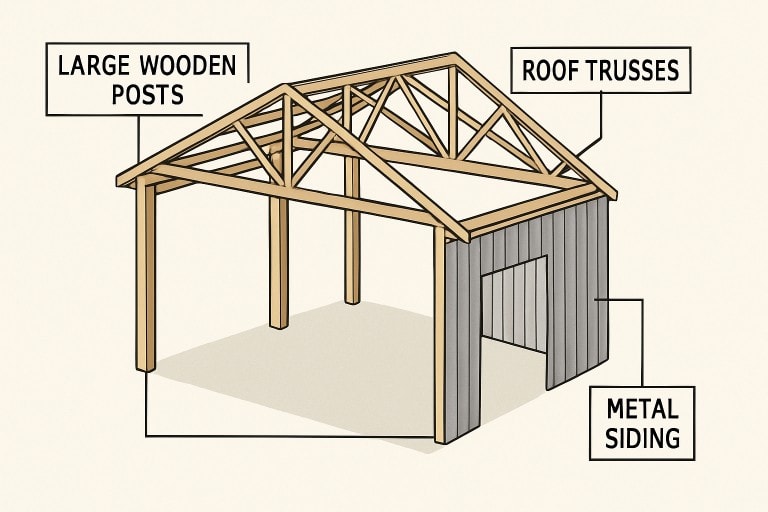
- Posts or Columns: Heavy-duty vertical supports that anchor directly into the ground or onto concrete piers, forming the primary structural frame.
- Girts and Purlins: Horizontal members; girts reinforce the sidewalls while purlins span the roof, supporting the exterior panels.
- Roof Trusses: Engineered assemblies that bridge the width of the building, handling the roof load and enabling clear, open spans.
- Siding and Roofing: Most pole buildings use metal panels for both siding and roofing. These materials are valued for their weather resistance, longevity, and ease of maintenance.
Advantages of Pole Buildings
Pole buildings have surged in popularity because of several compelling benefits:
- Cost-Effectiveness: They typically use fewer building materials and require less labor, often reducing construction costs by 10–30% compared to traditional framing methods.
- Quick Assembly: The simple framing system enables professional crews—and even some DIY builders—to erect a structure in a fraction of the time required for conventional buildings.
- Open Floor Plans: The structural design eliminates most interior supporting walls, giving you complete freedom to arrange the interior according to your exact needs—whether for open storage, living quarters, or service bays.
- Strength and Durability: With the right materials and construction methods, pole buildings are exceptionally sturdy and can withstand severe weather, heavy snow, and strong winds.
Common Uses for Pole Buildings
Originally designed for the agricultural market, today’s pole buildings can be tailored for countless uses:
- Residential Garages and Workshops: Ideal for homeowners who need extra storage, parking, or workspace—often at a lower cost than adding a garage or standalone garage.
- Commercial Spaces: Businesses have adopted pole buildings for retail outlets, offices, and even light industrial warehouses, appreciating the lower overhead and flexible layouts.
- Community Facilities and Churches: Their spacious, unobstructed interiors make them perfect venues for large gatherings, events, and communal activities.
- Barndominiums: Combining living space with utility areas has become a popular trend, providing a rural lifestyle with a modern twist.
Design Considerations
When you’re planning a pole building, it’s important to incorporate these vital considerations:
Site Preparation
Choose a well-drained site and grade the area appropriately. Good drainage around your building’s perimeter prevents water infiltration and long-term foundation issues.
Foundation Choices
Options include burying posts directly in the earth, mounting them to concrete piers, or using a full concrete slab. The right choice largely depends on your soil type, climate, and intended building use.
Insulation and Ventilation
If you plan to use the building year-round or for habitation, invest in insulation and a well-designed ventilation system. This ensures both comfort and energy efficiency throughout the seasons.
Permits and Codes
It’s essential to comply with local regulations. Check with your local building authorities to determine the requirements regarding setbacks, occupancy, and construction standards before breaking ground. Additional information on building permits and codes can be found at Family Handyman.
Final Thoughts
Pole buildings offer a unique blend of strength, affordability, and adaptability that remains unmatched in the construction industry. Whether you need a spacious barn, a modern workshop, or a community space, post-frame construction offers a proven and versatile solution. By understanding the essential elements and planning considerations involved, you can achieve a successful pole building that endures for generations to come.