
Key Takeaways
- Passive income allows you to earn money with minimal ongoing effort.
- Different sources carry varying levels of risk and potential return.
- Low-risk options include high-yield savings accounts, CDs, dividend stocks, REITs, and peer-to-peer lending.
- Diversifying your investments helps reduce risk.
- Researching opportunities thoroughly and starting small supports steady, long-term growth.
- Align your passive income strategy with your personal goals, risk tolerance, and timeline.
Understanding Passive Income
Passive income offers a practical way to grow your wealth by earning money with minimal day-to-day involvement. This type of revenue stream typically comes from investments, property, or creative assets such as royalties, and can deliver steady returns for individuals willing to plan strategically. For a detailed explanation of how passive income works, understanding the mechanics behind these income streams is essential before getting started.
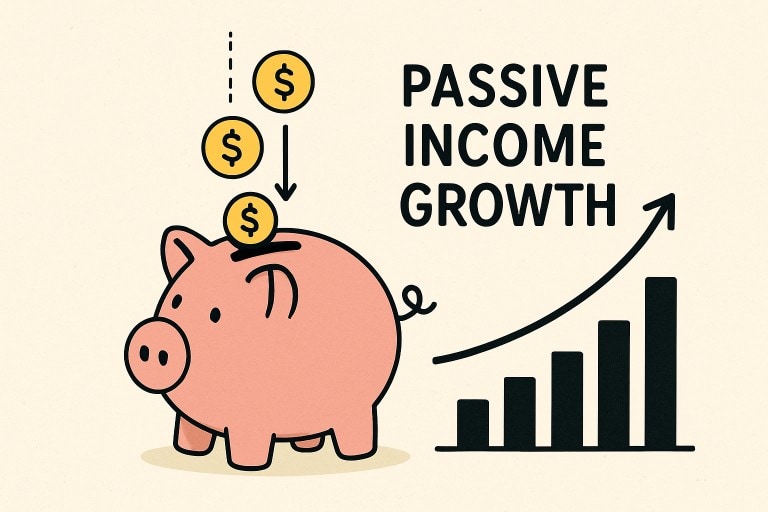
The allure of passive income lies in its ability to let you generate ongoing earnings even as you continue working your regular job or pursuing other interests. Although it requires some up-front effort or investment, the goal is always to create a source of cash flow that eventually becomes self-sustaining. Whether you are saving for retirement, seeking financial independence, or just looking to supplement your income, passive income strategies can play a crucial role in your overall financial plan.
Not all passive income types are created equal; some involve greater risk, while others offer greater security and predictability. Selecting the right options depends on your risk tolerance, investment goals, and timeframe. Individuals who prioritize safety may want to focus on more conservative methods that still provide the benefit of hands-off earnings.
Low-Risk Passive Income Strategies
1. High-Yield Savings Accounts
High-yield savings accounts are among the simplest yet most effective ways to earn passive income with very little risk. These accounts offer interest rates significantly above those of traditional banks, helping your savings grow over time. Many online financial institutions currently offer competitive annual percentage yields (APYs), sometimes exceeding 4 percent. Because your money remains easily accessible and insured by institutions such as the FDIC, the risk profile remains low while your returns compound over the years. These accounts are especially suited for those new to passive income or those seeking stability in their portfolio.
2. Certificates of Deposit (CDs)
Certificates of Deposit (CDs) are time-bound savings products offered by banks and credit unions. By committing your funds for a set period, you earn a fixed interest rate, making CDs a dependable option for conservative investors. Since CDs are insured up to established limits, the risk of loss is minimal. The biggest decision is selecting a term that aligns with your liquidity needs so you can lock in a competitive rate without sacrificing flexibility.
3. Dividend-Paying Stocks
Dividend-paying stocks are a traditional way to generate passive income. These companies, often well-established and financially sound, regularly distribute a portion of their earnings to shareholders. While stock investments always carry some market risk, focusing on companies with a long history of stable dividends can reduce volatility. Reinvesting those dividends can further enhance your returns over the long term. Many investors prefer dividend stocks because they combine growth potential with consistent payouts.
4. Real Estate Investment Trusts (REITs)
REITs allow individuals to invest in real estate markets without owning physical property. These entities own or finance a range of income-producing real estate assets and are required to pay out a significant portion of their earnings as dividends. With REITs, shareholders enjoy regular income and diversification across multiple property types, all while avoiding the hassle of direct property management. This makes REITs an accessible choice for people who want to benefit from real estate without tying up large amounts of capital or taking on landlord responsibilities.
5. Peer-to-Peer Lending
Peer-to-peer (P2P) lending has become an innovative way for investors to earn interest by funding personal and small-business loans through online platforms. By allocating funds across a variety of borrowers, investors spread risk and increase the likelihood of steady returns. While not entirely risk-free, using reputable platforms and diversifying across a broad range of loans can help minimize losses from borrower defaults.
Tips for Minimizing Risk
- Diversify Your Investments: Invest across different asset classes to reduce exposure to any one type of risk. Diversification is a key principle in building stable passive income.
- Conduct Thorough Research: Always investigate each opportunity to understand the risk factors, expected returns, and potential drawbacks. Relying on trusted financial news and resources can significantly improve your outcomes.
- Start Small: Consider committing a modest amount at first to test how each avenue performs before scaling up your investment.
Final Thoughts
Passive income can significantly bolster your financial health by providing a steady cash flow with minimal active work. Approaches such as high-yield savings accounts, CDs, dividend-yielding stocks, REITs, and peer-to-peer lending are well-suited for those looking to minimize risk. By carefully researching each method, diversifying your investment, and starting with manageable commitments, you can gradually build a portfolio that helps achieve both safety and returns. Always remember to tailor your strategy to your personal goals and risk tolerance, so your passive income journey aligns with your broader financial objectives.