
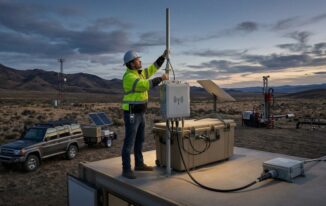
Understanding 4-Wire IP Relay Technology
Modern industries increasingly rely on resilient, wide-range communication systems that go beyond the limitations of traditional land mobile radio (LMR). This is where 4-Wire IP Relay technology comes in, serving as a critical bridge between two-way radios and a variety of IP-based networks. By integrating satellite, cellular, and private IP networks with conventional radio systems, users can maintain seamless conversations and share crucial data even when separated by vast distances or challenging terrain.
Integrating 4-Wire IP Relay solutions enables organizations to upgrade their old radio infrastructure, providing connectivity where traditional signals might falter. Expanding communication outside of LMR coverage areas allows teams in isolated environments, from remote job sites to disaster-struck regions, to stay connected in real time.
This gateway approach highlights the flexibility and adaptability of 4-Wire IP Relay technology. Whether you’re part of a public safety team, managing remote oilfields, or deployed in defense operations, extending your communication lines is now easier and more cost-effective than ever.
Learn more about the company behind these robust solutions at Skymira and discover additional technologies driving advances in remote communications.
Key Features and Benefits
- Vendor Agnostic: This technology is designed to work with radios from any manufacturer, providing remarkable flexibility and ensuring that existing infrastructure won’t be made obsolete by upgrades.
- Highly Secure: Advanced encryption standards are central to modern 4-Wire IP Relay solutions, protecting communications from interception or cyberattacks and ensuring sensitive information remains confidential.
- Network Agnostic: The platform is not tied to a single network type, meaning consistent coverage is possible even in locations served only by satellite or cellular networks.
- GPS Tracking & Emergency Alerts: Access to real-time geolocation and immediate distress signal capabilities means that emergency responders and field personnel can coordinate and react more quickly and safely.
- Automatic Failover: Connectivity is maintained with the ability to switch instantaneously to the strongest available network, so conversations and data transfers are uninterrupted even if a primary connection drops.
Real-World Applications
Many sectors now depend on the reliable connectivity made possible by 4-Wire IP Relay technology. First responders in disaster zones benefit when hurricane-damaged radio towers are bypassed using satellite backhauls. Defense operators can coordinate securely in remote or hostile terrains without fear of communication breakdowns. Utilities and oil and gas firms use these solutions to monitor assets and ensure field technician safety even when work takes them well beyond cell coverage. According to a report from RCR Wireless News, integrating IP technologies with legacy systems dramatically increases the scope and resilience of communications in all these sectors.
Additionally, in large-scale infrastructure projects such as highways, bridges, and power distribution networks, teams often work across vast and difficult-to-reach areas. The deployment of 4-Wire IP Relay systems ensures that constant contact is maintained across these large expanses, boosting efficiency and significantly enhancing worker safety. In transportation, these relay solutions offer just-in-time communication for logistics teams coordinating supply chains or for aviation and maritime operations where distances can impede traditional communication channels.
Healthcare facilities operating across dispersed clinics or mobile medical units in rural areas also benefit from the robust capabilities that 4-Wire IP Relay delivers. By extending IP connectivity to remote locations, emergency consultation and real-time patient data sharing are now possible even outside of conventional network zones. Moreover, educational organizations running field research or environmental monitoring can use these technologies to send live findings or emergency notifications from isolated wilderness sites back to a central campus location.
Comparative Advancements in Relay Technologies
The communication technology landscape is evolving rapidly, and 4-Wire IP Relay solutions are just one piece of this innovation. For instance, Phoenix Contact’s PLC-INTERFACE Ethernet Gateway exemplifies how khttps://www.phoenixcontact.com/en-pc/events-and-news/news/network-capable-plc-interface-ethernet-gateway-remote-relay-system
are being re-engineered for efficiency and compactness in industrial contexts. These systems enable the straightforward integration of discrete, analog, and temperature signals into Ethernet-connected environments, reducing wiring complexity and saving valuable control cabinet space.
Alongside hardware advancement, software-driven relay and network orchestration tools are emerging, making the management of redundant pathways and critical channel switching highly automated and intuitive. Businesses today are demanding faster deployment cycles, which drives innovation in modular design and plug-and-play relay system components. By supporting not just voice but increasingly large data payloads, video, and telemetry, the boundaries of relay-driven communication are being expanded far beyond the original use-case of analog radio signal extension.
Future Prospects
As global digital transformation accelerates, the integration of 4-Wire IP Relay systems with Internet of Things (IoT) and artificial intelligence (AI) applications is expected to drive even more dynamic, reliable communication platforms. This will allow for predictive monitoring, automated decision support, and even smarter network failover responses. The result will be safer, more efficient operations across industries, whether teams are monitoring weather conditions, coordinating logistics, or deploying resources in emergency situations.
Looking forward, advancements in edge computing and 5G connectivity will further amplify the potential of 4-Wire IP Relay solutions. When edge devices can process data locally before relaying critical alerts or controls over long distances via secure IP links, it reduces latency and provides more contextual, real-time decision-making capability. With the proliferation of smart sensors and autonomous devices, relays will serve as the backbone that underpins decentralized, AI-driven operations in logistics, defense, industry, and emergency services. This creates a vision for future networks that are not only always-on and robust, but increasingly intelligent and responsive.
Conclusion
4-Wire IP Relay technology stands out as a pivotal advancement for remote and mission-critical communications. By connecting disparate network technologies, securing data exchanges, and remaining resilient against network disruptions, it is setting a new standard for remote connectivity. As the technology continues to evolve alongside AI and IoT integrations, organizations can look forward to safer, more responsive communication frameworks that empower field personnel and streamline operations in the most challenging conditions.