

There is something unsettling about waking up one morning and noticing that the world looks a little less sharp than before. Whether it develops slowly or suddenly, blurry or hazy vision can affect confidence, safety, and daily life. Many people brush it off as tiredness or too much screen time, only to find that there may be deeper reasons behind it.
Vision changes often sneak up without us noticing. It may begin as foggy lights, slight difficulty recognising faces, or the need to squint more often. These small signs remind us how delicate clear vision is and why it is important to pay attention early.
Understanding what causes blurred or hazy vision can help people seek treatment before the problem worsens. From simple eyestrain to more serious conditions that might require the expertise of an eye surgeon for cataract treatment, many factors can stand in the way of seeing clearly.
Cataracts and Age-Related Changes
For many adults, blurry vision is often part of getting older. Cataracts are one of the main reasons, making the eye’s natural lens cloudy and causing light to scatter instead of focusing clearly.
Clouding of the Eye’s Lens
A cataract forms slowly, often starting with slightly dull vision that becomes more noticeable over time. The eye’s lens, which should be clear and flexible, gradually turns cloudy, affecting how light passes through. Colours may look faded, night vision may get worse, and bright lights may seem harsher. Many people describe it as looking through a foggy window or smudged glasses. The change is usually painless but keeps getting worse.
How Light and Focus Are Affected
The cloudiness not only makes things blurry but can also distort how you see. Headlights at night might look streaky or starburst-like, and reading small print can become frustrating. Everyday tasks like reading signs or recognising faces may suddenly feel harder. These symptoms can affect daily life and slowly reduce confidence, especially in dim lighting.
Seeking Professional Assessment
While cataracts are a normal part of getting older, finding them early and treating them can greatly improve daily life. Regular eye exams help spot changes before the cloudiness gets severe. In more advanced cases, surgery can restore clear vision. A qualified specialist can remove the cloudy lens and replace it with a clear artificial one, often giving much better eyesight. This procedure is one of the safest and most effective eye surgeries available today.
Refractive Issues and Eye Strain
Not all blurry vision comes from aging. Younger people may notice hazy or tired eyes from refractive issues or too much screen time. These problems are becoming more common in our screen heavy world.
Changes in Eye Shape and Focus
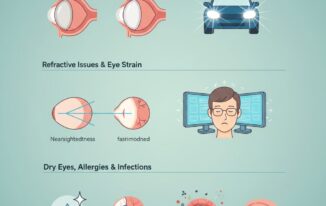
Refractive issues like nearsightedness, farsightedness, and astigmatism happen when the shape of the eye doesn’t let light focus correctly on the retina. This can make objects look blurry at certain distances. People with nearsightedness struggle with distant vision, while farsighted people have to work harder to see close up. Astigmatism, often inherited, can make things look stretched or uneven. These focusing problems can usually be fixed with glasses, contacts, or vision correction surgery.
The Rise of Digital Eye Strain
Modern life brings another challenge for our eyes. Looking at computers, phones, or tablets for many hours makes the eyes work harder than usual. The constant close focus tires the eye muscles and can reduce blinking, which dries the eyes and causes temporary blur. Many people notice a hazy feeling that goes away after resting their eyes. Following the 20‑20‑20 rule, keeping good lighting, and adjusting screen distance can help ease this issue before it becomes more serious.
Dry Eyes, Allergies, and Infections
Eye dryness, allergies, and infections can also make vision look hazy or filmy. They may seem minor, but the discomfort can affect daily life and focus.
When Tears Are Not Enough
Tears keep the eyes smooth and vision clear. Ageing, weather, and too much screen time can reduce tear quality or quantity. When the eyes dry out, vision may go from clear to blurry during the day. Using artificial tears and taking regular breaks from close work can help the eyes feel comfortable again.
Reactions to Allergens and Irritants
Allergic reactions from pollen, dust, or pet dander can make the eyes red, puffy, and watery. The irritation and swelling can blur vision temporarily. Avoiding triggers or using prescription antihistamine drops can help soothe the eyes. For those with sensitive eyes, keeping a clean environment can make a big difference.
Dealing with Infections Safely
Eye infections such as conjunctivitis can cloud the eye and make vision hazy. They may come with redness, discharge, and discomfort. Getting medical care quickly prevents complications and ensures the infection is treated properly. Good hygiene, like avoiding touching or rubbing the eyes, reduces the risk of spreading the infection.
Understanding When to Seek Help
Blurred or hazy vision should not be ignored. Sometimes it signals a condition that needs professional attention. Regular eye exams can catch problems early before serious damage occurs. Whether the cause is a refractive issue, dryness, or cataracts, seeing a doctor early makes a big difference.
For anyone experiencing persistent cloudiness, consulting an eye specialist or cataract surgeon can restore both vision and peace of mind. Simple steps such as resting the eyes, managing allergies, or wearing the right eyewear all help protect healthy vision. Clear sight improves daily life and lets people enjoy the world in bright, sharp detail.